Satu bulan penuh cerita, pertemuan, dan semangat untuk orangutan akhirnya sampai di penghujungnya. Namun, sebelum benar-benar ditutup, ada sat perjumpaan yang tidak boleh dilewatkan. Dating APES batch 18 hadir di Jogja sebagai penutup rangkaian Bulan Orangufriends 2026, sekaligus menjadi ruang untuk kembali duduk bersama, berbagi cerita, dan membicarakan masa depan satwa liar serta hutan Indonesia.
Kali ini, Dating Apes terasa begitu istimewa. Bukan sekadar karena menjadi edisi penutup, tetapi karena menghadirkan tiga sosok dengan cerita dan perspektif yang menarik: Nadia dan Gavrila dari Uma Project, serta Muhammad Zuhdi. Ketiganya membawa pengalaman, sudut pandang, dan cerita masing-masing yang kemudian bertemu dalam satu ruang diskusi yang hangat.
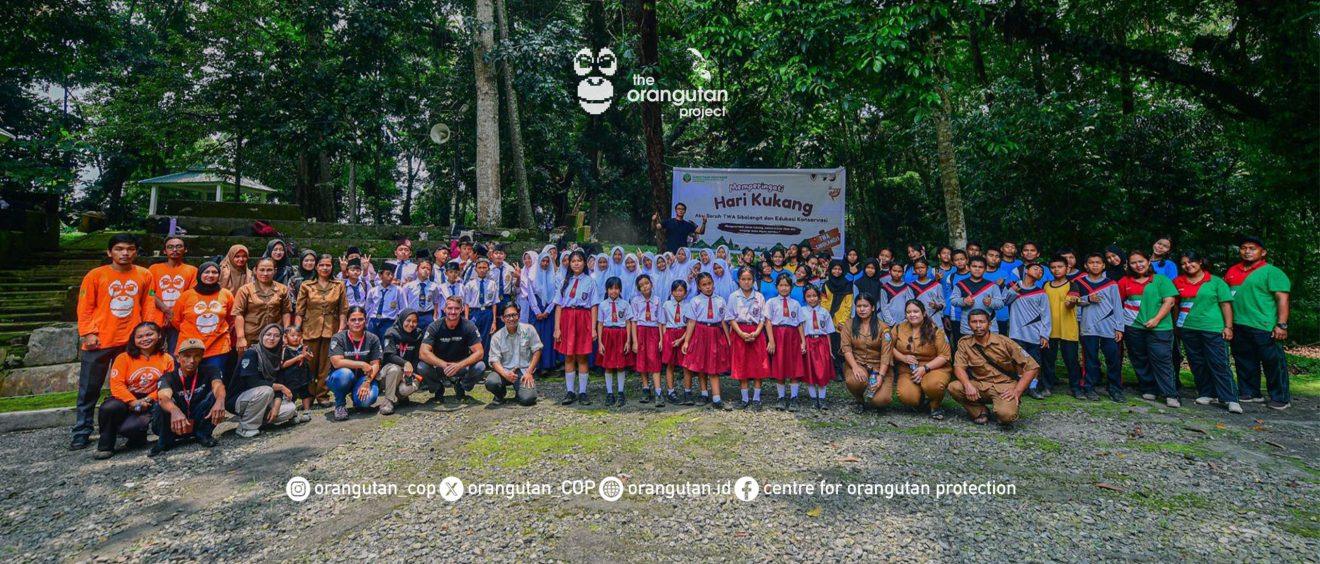
Lebih dari 30 orang hadir dan ikut meramaikan pertemuan ini. Ada Orangufriends Jogja, teman-teman dari berbagai lembaga konservasi, mahasiswa, pegiat alam, hingga mereka yang datang dengan rasa penasaran dan kepedulian terhadap isu satwa liar. Beragam latar belakang justru membuat obrolan semakin kaya.
Dari satu cerita, muncul cerita lainnya. Dari satu pertanyaan, lahir perspektif baru. Percakapan tidak berhenti pada orangutan saja, tetapi berkembang menjadi pembahasan tentang satwa liar, habitat, kerja-kerja konservasi, hingga bagaimana setiap orang dapat mengambil peran dalam menjaga alam.
Mungkin inilah yang membuat Dating Apes selalu menarik. Tidak ada jarak antara pembicara dan peserta. Tidak ada sekat antara mereka yang sudah lama berkecimpung di dunia konservasi dan mereka yang baru mulai mengenalnya. Semua datang untuk satu hal: bertemu, mendengar, bertukar pikiran, dan pulang membawa cerita baru.
Bulan Orangufriends 2026 mungkin telah selesai, tetapi semangatnya tidak berhenti di sini. Karena menjaga hutan dan satwa liar bukan pekerjaan satu bulan, melainkan perjalanan panjang yang membutuhkan banyak orang untuk terus berjalan.
Terima kasih untuk seluruh teman yang sudah hadir, berbagi cerita, bertanya, tertawa, dan menjadi bagian dari perjalanan Orangufriends selama sebulan ini.
Sampai bertemu di Dating Apes berikutnya!
I used to scan every bush at BORA, looking for this exact type of weed. I plucked every bit of this weed I could find from every bush, every patch of grass, every roadside. If I saw something that looked like it, I would stop and check. Just because Beti would eat it.
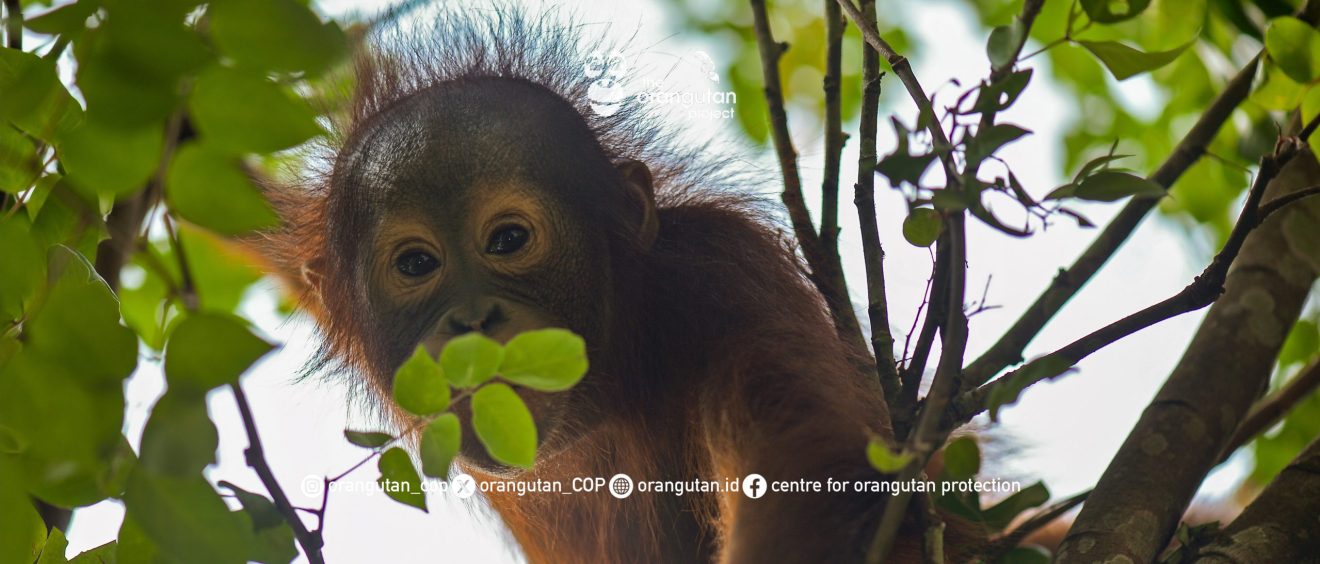
At that time, if Beti ate something, it felt like a victory. She would only eat water apples and oranges, or a piece of apple, or a piece of pear. Then she would just sit there, covering her body with sack for the entire day. Even sometimes she wouldn’t eat at all, she wouldn’t drink, clearly in pain. And sometimes, it felt like she resented us.
That was when I started questioning things. I thought about a thousand things we could have avoided, anticipated, or done differently during Beti’s translocation. I even had the terrible thought of if Beti had never come to BORA, she wouldn’t have been stressed. Maybe she wouldn’t refuse to eat for days.
I became very skeptical. Thinking about how humans are such an arrogant species. We decide what is best for another species. We decided Beti should no longer live as a pet. We decided she should be moved. We decided what she should eat. What kind of environment she should live in.
But did we really know what was best for Beti?
Because from Beti’s perspective, we had taken everything familiar away. Imagine if you had spent 24 years living in a village in Java, with that specific man. You were fed the same side dishes his family ate. You lived in a concrete-floored cage. Sometimes you were taken out to be played with, to be someone’s pet. You were fed only from noon. Neighboring children poked you, you became a spectacle for them when they getting fed by their mother. For 24 years. Until you became almost completely apathetic to stimulation.
Then suddenly, you were moved into a tiny transport crate. Suddenly, you were taken somewhere by car. Suddenly, you entered an extremely cold room, a plane, though Beti wouldn’t know it was a plane. Then came an almost 24-hour travel by land, noisy and dusty.
Suddenly, you were placed in a very large enclosure, but everything was made of bars. You trembled. Then the food changed. Fruit. Vegetables. Strange green things. They were green before too, but they had been cooked and seasoned.
Suddenly, people were poking you here and there. Your hair was shaved because you needed an ultrasound. You were suddenly being shot with blow darts because you needed antibiotics. The weather was unbearably hot. And then, after 24 years of seeing only human, you suddenly found creatures who looked like you. Wouldn’t you be stressed?
It took me months to see things differently.
Bringing Beti here did not immediately make her life better. For a while, it made everything harder. But BORA gave Beti something she never had before, options of second chances. Here, we can monitor her health, treat her when she is in pain, and make sure she gets the care she needs. She gets appropriate food, people who pay attention to what she eats, what she refuses, what makes her uncomfortable, and what makes her feel safe.
Slowly, she started to eat more. There are now so many things Beti can eat that sometimes it is hard to remember the days when I was desperately searching every bush for that one weed. She still has her chronic urinary tract infection (UTI), and she still needs to recover. She still loves her sack, and there are still days when she would rather hide under it than do anything else. But there is progress, even if it is slow enough that you sometimes have to stop and look for it.
Her journey is also so different from the babies and juveniles we rehabilitate here. When they arrive, they still have so much time ahead of them. They can go to Forest School, where they can learn to climb, swing, build nests, search for food, navigate the trees, and interact with other orangutans. Their rehabilitation happens step by step, and every new skill becomes part of the foundation they will eventually need to survive in the forest. They can spend years building the strength, confidence, and knowledge they need before they are released.
Beti cannot have that same journey. She is already an adult, and she is simply too large for the keepers to safely handle. She cannot go to Forest School and spend her days swinging through the trees, strengthening her hands and feet for the canopy. She cannot follow the same curriculum of learning that the younger orangutans do. The things they get to learn through experience, Beti has to learn in much smaller ways, from inside her cage.
So we bring a little bit of the forest to her instead. We give her jungle fruits and introduce her to foods that she might encounter in the jungle. It is not the same as learning to forage in the jungle itself. It will never replace what she missed during those 24 years.
That is what makes Beti’s progress so difficult to compare with the others. For a juvenile orangutan, climbing higher might be one step in a long journey toward the forest. For Beti, simply choosing to climb at all is already something significant. For a baby, learning to eat a new fruit might be part of a normal day at Forest School. For Beti, finding out that she likes a jungle fruit is a small window into a world she was never given the chance to know.
Looking back, I still think about all the things we could have done differently. I still wonder whether her transition could have been slower, whether we could have prepared her better, whether we could have anticipated some of the things that happened. I don’t think those questions will ever completely go away. But I do know I would still bring Beti to BORA all over again.
Beti’s progress may be slow, but I will celebrate every bit of it. And I have been celebrating them. I celebrated when she ate her very first sawi. I celebrated when she finally perched and made herself comfortable on her iron nest. I celebrated when she finally engaged with the enrichment we gave her, when she started to enjoy the jungle fruits we introduced to her, and every other small bit of progress in between. And I will keep on celebrating.
Happy world orangutan day and happy one year at BORA, sweet Beti!
(THA)
Kebakaran hutan di Kalimantan semakin menggila. Panas, sesak, hingga membuat penglihatan sangat buram. Inilah dampak yang dirasakan langsung sebagai manusia yang tinggal di kota. Pertanyaannya, kita yang di kota saja tersiksa, bagaimana makhluk hidup lain yang ada di hutan sana?
Bagi Ndaru, perjalanan memahami konservasi bermula dari rasa penasaran. Sedari kecil hingga dewasa ia hidup di Kota Solok, Sumatera Barat, dan tak pernah terpikirkan betapa pentingnya hutan dan satwa. Hingga suatu ketika ia menemukan informasi tentang pelatihan konservasi ABELII CAMP yang diadakan COP di Medan. Dari sana, ia mulai memahami luasnya arti konservasi dan pentingnya menjaga hutan beserta seluruh isinya.
Kesadaran itu kemudian membawanya menjadi volunteer di COP selama kurang lebih empat bulan. Perjalanan tersebut berlanjut ketika ia mengikuti COP School Batch 16 di Yogyakarta pada Juli 2026. Baginya, pelatihan bukan sekadar sekolah, tetapi titik yang semakin menguatkan tekad untuk turun langsung ke lapangan.
Hal yang sama dirasakan Ulul. Setelah menunggu enam tahun untuk mendapatkan kesempatan mengikuti COP School, ia menganggap Batch 16 sebagai titik balik perjalanan konservasinya. Dari materi ruang, School Visit di beberapa sekolah dasar, hingga kesempatan mengikuti ADR Training Batch 4 di Labuan Bajo, setiap pengalaman menjadi bagian dari proses belajar yang tidak pernah selesai.
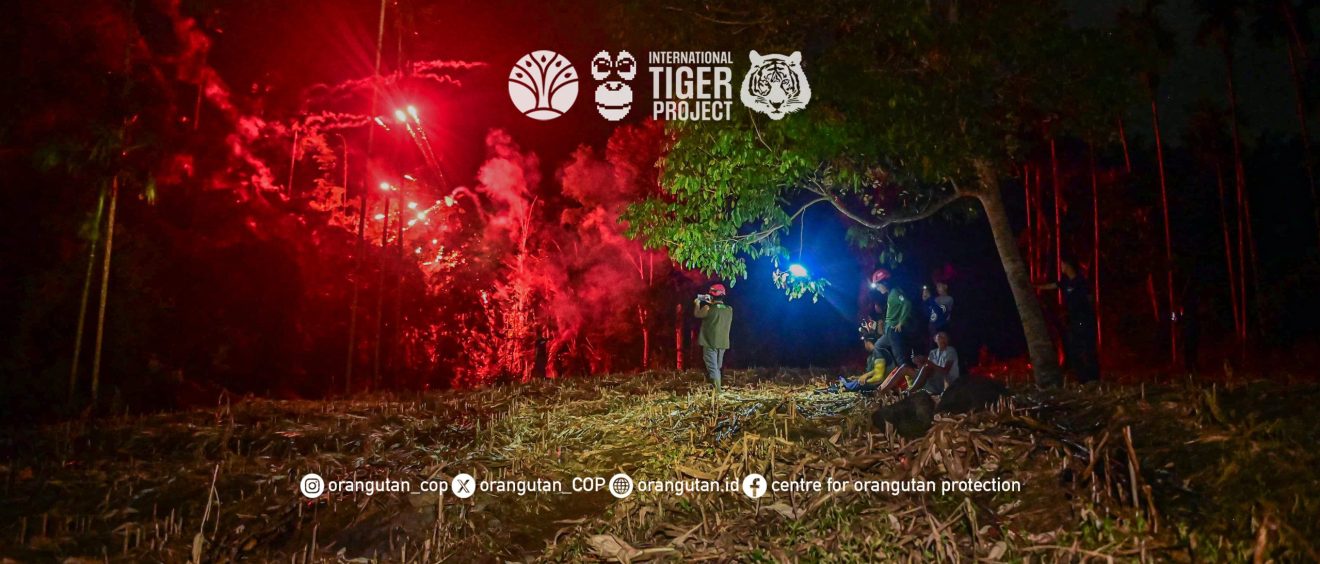
Selepas rangkaian pelatihan tersebut, panggilan untuk kembali menjadi volunteer datang. Kali ini, Kalimantan Timur menjadi tujuan. Ndaru dan Ulul diutus bersama tim COP menuju Pusat Rehabilitasi Orangutan Bora Labanan, Berau, untuk membantu menghadapi kebakaran hutan. Mereka melakukan patroli kawasan, mencari titik api dan asap, hingga beberapa kali terlibat langsung dalam pemadaman api di dalam maupun luar kawasan.
“Berhari-hari saya di Kalimantan, tiada sehari pun saya menghirup udara segar. Yang ada hanyalah kepulan asap dan kobaran api yang sangat panas,” ujar Ndaru.
Di tengah kondisi tersebut, ia kembali teringat pelatihan konservasi pertamanya tentang pentingnya hutan, satwa, dan seluruh kehidupan di dalamnya. “Apalah artinya manusia apabila tidak berdampak bagi lingkungannya.”
Bagi Ulul, pengalaman itu kembali menegaskan bahwa menjadi Orangufriends berarti membawa perubahan nyata bagi konservasi satwa di mana pun berada. “Ini bukanlah garis akhir, namun menjadi gerbang pembuka awal.”
Karena bagi mereka, COP School bukan sekadar sekolah. Ia adalah sekolah yang tak pernah usai tempat belajar, bergerak, dan terus menemukan cara untuk berkontribusi (Ulul_Ndaru_COP School 16).