BETI’S JOURNEY: ONE YEAR AT BORA
I used to scan every bush at BORA, looking for this exact type of weed. I plucked every bit of this weed I could find from every bush, every patch of grass, every roadside. If I saw something that looked like it, I would stop and check. Just because Beti would eat it.
At that time, if Beti ate something, it felt like a victory. She would only eat water apples and oranges, or a piece of apple, or a piece of pear. Then she would just sit there, covering her body with sack for the entire day. Even sometimes she wouldn’t eat at all, she wouldn’t drink, clearly in pain. And sometimes, it felt like she resented us.
That was when I started questioning things. I thought about a thousand things we could have avoided, anticipated, or done differently during Beti’s translocation. I even had the terrible thought of if Beti had never come to BORA, she wouldn’t have been stressed. Maybe she wouldn’t refuse to eat for days.
I became very skeptical. Thinking about how humans are such an arrogant species. We decide what is best for another species. We decided Beti should no longer live as a pet. We decided she should be moved. We decided what she should eat. What kind of environment she should live in.
But did we really know what was best for Beti?
Because from Beti’s perspective, we had taken everything familiar away. Imagine if you had spent 24 years living in a village in Java, with that specific man. You were fed the same side dishes his family ate. You lived in a concrete-floored cage. Sometimes you were taken out to be played with, to be someone’s pet. You were fed only from noon. Neighboring children poked you, you became a spectacle for them when they getting fed by their mother. For 24 years. Until you became almost completely apathetic to stimulation.
Then suddenly, you were moved into a tiny transport crate. Suddenly, you were taken somewhere by car. Suddenly, you entered an extremely cold room, a plane, though Beti wouldn’t know it was a plane. Then came an almost 24-hour travel by land, noisy and dusty.
Suddenly, you were placed in a very large enclosure, but everything was made of bars. You trembled. Then the food changed. Fruit. Vegetables. Strange green things. They were green before too, but they had been cooked and seasoned.
Suddenly, people were poking you here and there. Your hair was shaved because you needed an ultrasound. You were suddenly being shot with blow darts because you needed antibiotics. The weather was unbearably hot. And then, after 24 years of seeing only human, you suddenly found creatures who looked like you. Wouldn’t you be stressed?
It took me months to see things differently.
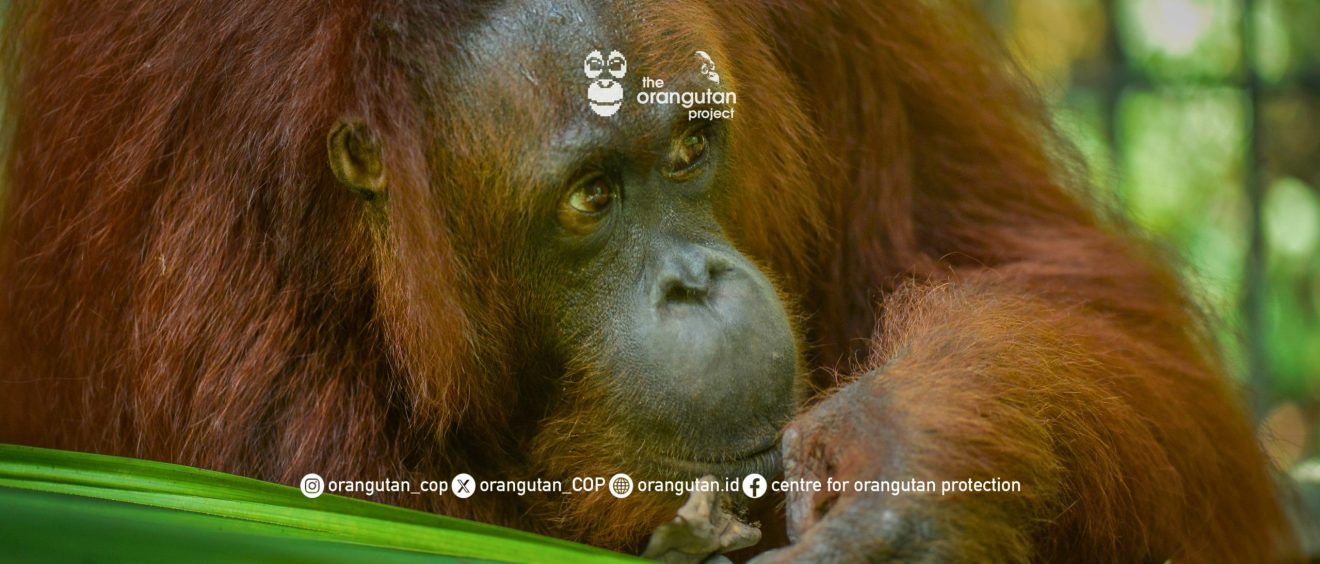
Bringing Beti here did not immediately make her life better. For a while, it made everything harder. But BORA gave Beti something she never had before, options of second chances. Here, we can monitor her health, treat her when she is in pain, and make sure she gets the care she needs. She gets appropriate food, people who pay attention to what she eats, what she refuses, what makes her uncomfortable, and what makes her feel safe.
Slowly, she started to eat more. There are now so many things Beti can eat that sometimes it is hard to remember the days when I was desperately searching every bush for that one weed. She still has her chronic urinary tract infection (UTI), and she still needs to recover. She still loves her sack, and there are still days when she would rather hide under it than do anything else. But there is progress, even if it is slow enough that you sometimes have to stop and look for it.
Her journey is also so different from the babies and juveniles we rehabilitate here. When they arrive, they still have so much time ahead of them. They can go to Forest School, where they can learn to climb, swing, build nests, search for food, navigate the trees, and interact with other orangutans. Their rehabilitation happens step by step, and every new skill becomes part of the foundation they will eventually need to survive in the forest. They can spend years building the strength, confidence, and knowledge they need before they are released.
Beti cannot have that same journey. She is already an adult, and she is simply too large for the keepers to safely handle. She cannot go to Forest School and spend her days swinging through the trees, strengthening her hands and feet for the canopy. She cannot follow the same curriculum of learning that the younger orangutans do. The things they get to learn through experience, Beti has to learn in much smaller ways, from inside her cage.
So we bring a little bit of the forest to her instead. We give her jungle fruits and introduce her to foods that she might encounter in the jungle. It is not the same as learning to forage in the jungle itself. It will never replace what she missed during those 24 years.
That is what makes Beti’s progress so difficult to compare with the others. For a juvenile orangutan, climbing higher might be one step in a long journey toward the forest. For Beti, simply choosing to climb at all is already something significant. For a baby, learning to eat a new fruit might be part of a normal day at Forest School. For Beti, finding out that she likes a jungle fruit is a small window into a world she was never given the chance to know.
Looking back, I still think about all the things we could have done differently. I still wonder whether her transition could have been slower, whether we could have prepared her better, whether we could have anticipated some of the things that happened. I don’t think those questions will ever completely go away. But I do know I would still bring Beti to BORA all over again.
Beti’s progress may be slow, but I will celebrate every bit of it. And I have been celebrating them. I celebrated when she ate her very first sawi. I celebrated when she finally perched and made herself comfortable on her iron nest. I celebrated when she finally engaged with the enrichment we gave her, when she started to enjoy the jungle fruits we introduced to her, and every other small bit of progress in between. And I will keep on celebrating.
Happy world orangutan day and happy one year at BORA, sweet Beti!
(THA)